No — not unless your machine is specifically sold as a hot-water unit. Every consumer cold-water pressure washer has a maximum inlet temperature in its manual, and feeding it hotter water than that softens the pump seals and O-rings until the pump leaks or fails. The limit is commonly set somewhere around a warm-tap temperature rather than a hot-tap one; your manual states the figure for your machine, and that figure is the one that matters, not anything on the internet.
The instinct behind the question is sound. Hot water genuinely does clean better — it is why commercial crews own hot-water rigs and why a dishwasher works. The problem is purely mechanical: the pump in a cold-water machine was not built for it.
What actually happens if you do it
Seals soften and deform. The O-rings and pump seals are an elastomer chosen for cold-water duty. Heat makes them swell and lose their shape, and once they have they do not recover. The symptom arrives later as a weeping pump or a machine that will not build pressure.
Cavitation gets worse. Hot water flashes to vapor more readily at the low-pressure side of a pump. Vapor bubbles collapsing against metal is what pits valve seats, and it is a quiet, cumulative kind of damage.
Plastic components distort. Many homeowner machines have plastic manifolds, inlet fittings and detergent plumbing. None of it is specified for hot feed.
You void the warranty. Hot-water damage is identifiable and it is excluded. This is not a technicality anyone will let you argue.
What to look for before you try it anyway
The words “hot water” on the machine itself. True hot-water pressure washers exist, have a burner or a heating coil built in, and are sold as such. They are commercial equipment at a commercial price. If your machine does not say it, it is a cold-water machine.
The maximum inlet temperature in your manual. Every manufacturer publishes one. Find it before you connect anything other than a cold garden tap.
Whether the pump is brass or aluminum, and sealed or serviceable. It changes nothing about the temperature limit, but it does tell you how expensive the mistake would be. Most homeowner pumps are sealed, which means a damaged one ends the machine — see how long pressure washers last.
What to do instead: let the chemistry do it
Hot water is one way to break the bond between dirt and a surface. A detergent with dwell time is another, and it is the one available to you. This is the single most useful thing to understand about pressure washing: the chemicals do most of the cleaning that people credit to pressure, and they do it at tap temperature.
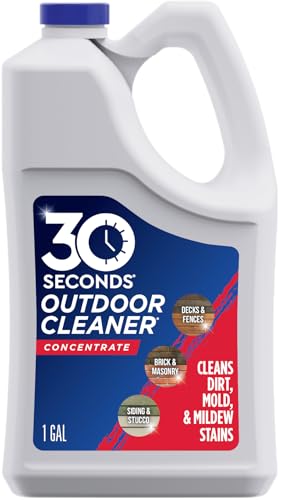
For mold, mildew and algae — the stains most people want hot water for — a dedicated concentrate left to dwell for several minutes beats hot water from a cold-water machine easily. Home Armor Outdoor Cleaner is the strong option; 30 Seconds Outdoor acts visibly within minutes and dilutes a long way.
For general grime across siding, concrete, wood and furniture, one oxygenated all-rounder like Simple Green Oxy Solve Total Outdoor covers most of a house and is kinder to the planting beds the run-off lands in.
For grease and motor oil, neither heat nor pressure is the answer from a homeowner machine — it is a degreaser and patience. See concrete cleaners.
The technique that makes this work is dwell: apply the detergent with a soap nozzle at low pressure, leave it wet for the time on the bottle, and only then rinse. Rinsing it off after thirty seconds is the mistake almost everyone makes. The method is in house wash mix ratios and how soap injectors work.
The gray area: warm water
People ask whether lukewarm water is acceptable. If your manual states a maximum inlet temperature and the water is comfortably below it, you are inside specification and nothing here says otherwise. What you should not do is guess, mix hot and cold at a laundry tap by feel, or assume a figure you read somewhere applies to your machine. The downside is a pump, and the upside is marginal compared with simply using the right detergent.
The short version
Cold water from the garden tap, a detergent chosen for the surface, and enough dwell time. That combination gets you to the same place as hot water on every household surface, costs a fraction of a hot-water machine, and does not shorten the life of the one you own. If you have a job that genuinely needs heat — heavy commercial grease, for instance — that is a rental or a contractor, not a modification to your machine. See rent or buy.