Here is the thing almost nobody tells a first-time pressure washer owner: most of what looks like dirt on a house, a fence or a shaded patio is not dirt. It is biological growth — algae, mildew, lichen. Pressure knocks the top layer off and it returns in weeks. A detergent kills it and it stays gone for a season or more.
Which means the twenty dollars you spend here does more for your results than a hundred dollars of extra machine. Professionals washing a house use low pressure and a lot of chemical; homeowners with powerful machines and no soap get worse results and damage the siding doing it.
If you buy one bottle
An all-purpose outdoor concentrate. The Simple Green Oxy Solve Total Outdoor covers siding, concrete, wood and furniture at one dilution, carries EPA Safer Choice recognition, and is hard to misuse. Use it for a season, notice which surface it struggles on, and let that tell you which specialist bottle to buy second.
Buying four bottles up front means three of them solidify in the garage. The honest version of that advice is in do I need pressure washer soap.
How the category divides
Oxygenated cleaners — sodium percarbonate based, usually labeled “oxy”. The homeowner default. They work on organic growth, they are comparatively kind to planting, and they are forgiving of a sloppy mix. Slower than bleach and they must stay wet while they dwell.
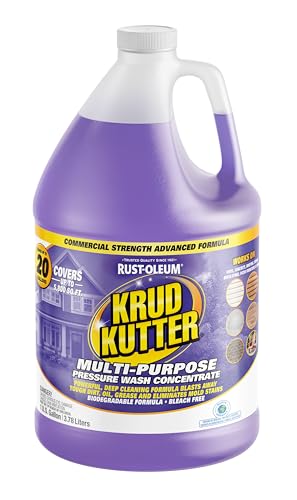
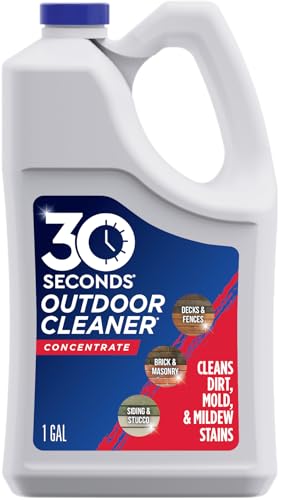
Stronger biocidal cleaners — faster and far more effective on heavy mildew, with more care needed around plants, metal and fabric. Home Armor and 30 Seconds sit here.
Surface-specific cleaners for concrete, wood and composite. These exist because the surfaces genuinely differ: a wood cleaner has to rinse clean so a stain will take, a concrete cleaner can be more aggressive than wood would survive.
Degreasers are a separate problem entirely. No cleaner on this page will lift motor oil out of a slab — that needs a dedicated product.
Everything here is concentrate, and that matters
Which is good — you are not paying to ship water — but it means your result depends on your dilution. Too strong wastes money and risks the surface; too weak and people conclude the product does not work. Ratios, and how to work out how much mixed product an area needs, are in house wash mix ratios.
The other half is delivery. Some machines have an onboard tank; most use a downstream injector that draws from a bucket. Either way the black low-pressure soap tip must be fitted, which is behind the overwhelming majority of “my soap is not working” complaints.
The technique that actually matters
Dwell time. Five to ten minutes, and never allowed to dry. This is where the cleaning happens, and it is the step people skip. A cleaner rinsed off after thirty seconds has done almost nothing.
Pre-wet the surface. Dry material absorbs cleaner unevenly and leaves tide marks.
Bottom-up to apply, top-down to rinse, on any vertical surface. The reverse causes streaking that shows up when it dries.
Protect planting. Pre-wet beds, and rinse them again afterwards. This applies even to the Safer Choice products.
What I left out, and why
Dish soap. It foams and it does not kill algae, which is the actual problem. Some formulations can also attack pump seals if drawn through the machine.
Machine-brand “universal” detergents at a premium, with one exception: if your machine has an onboard tank, a detergent formulated for tanks (like the Sun Joe concentrate) is genuinely less likely to gum one up.
Pre-diluted ready-to-use bottles. You are paying to ship water, and the dilution is chosen for you.