Short answer: if the surface has anything living on it, yes, and the difference is not marginal. If it is just dusty or muddy, no, and you can save the money.
The test
Wet a small patch and scrub it with a stiff brush and water. If it comes clean, water and pressure will do the whole job. If a gray, green or black tinge remains, that tinge is biological and it needs chemistry — no amount of pressure will remove it permanently.
Another clue: if you cleaned the surface last year and it looks the same again now, you removed the visible layer and left the organism. That is the signature of a job that needed detergent.
Where soap genuinely transforms the result
Siding. The black streaking on a shaded wall is mildew. Pressure takes the top off; a house wash kills it and it stays gone for a season. This is the clearest case on the list — the picks.
Shaded patios and paths. Green film and black spotting, same mechanism, same answer — patio cleaners.
Driveways with algae. The reason a clean driveway goes green again by midsummer — concrete cleaners.
Decks and fences. Both the gray and the black want a cleaner, and if a stain is going on afterwards a proper clean is mandatory — deck cleaners.
Cars. Different reason: a pH-neutral soap lets you lift grit off the paint before a mitt touches it, which is where swirl marks come from — car soaps.
Where water alone is fine
Mud off a wheel arch, a muddy wheelbarrow, boots, bikes. Pollen and dust off outdoor furniture. Rinsing a bin. Clearing leaves and grit from a gutter. Washing down a path that is dirty rather than green.
In all of those the soiling is inert and sitting on the surface. Pressure and water is the whole job, and detergent adds cost and rinsing for no benefit.
Oil is the exception in the other direction
Motor oil on concrete needs chemistry, but not detergent — it needs a dedicated degreaser or pull-out stain remover, because the oil is in the slab rather than on it. A general-purpose cleaner will not touch it, and neither will pressure. That is its own product category.
If you buy one bottle
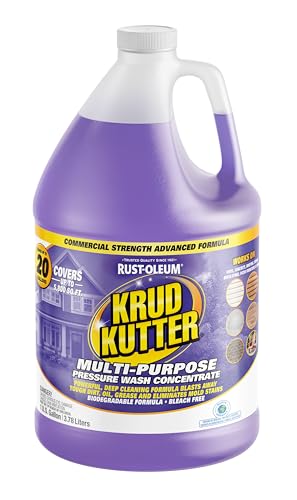
An all-purpose outdoor concentrate. It covers siding, concrete, wood and furniture at one dilution, it is cheap per mixed gallon, and using it for a season tells you which specialist bottle to buy second. Buying four up front means three solidify in the garage.
Two things to know before the first use: detergent only draws through the black low-pressure soap tip (why), and dwell time is where the cleaning happens — five to ten minutes, never allowed to dry. Ratios are in mix ratios.