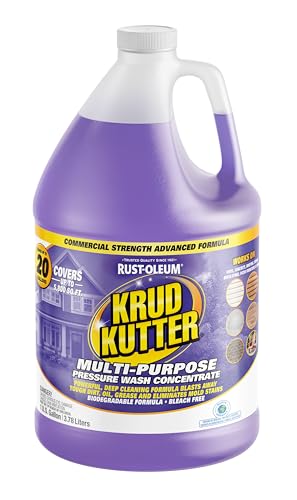
A deck has two problems and they want different things. The gray is weathered, oxidized wood fiber. The black and green is mildew and algae. A good deck cleaner addresses both, and — critically — rinses off completely, because residue left in the grain is the usual reason a stain or sealer fails to take.
Timber versus composite
Timber wants a cleaner that lifts growth and loosens the gray layer without needing pressure to do the work. Colorless and unscented is worth having: a tinted cleaner can stain light softwood, and you will be smelling it all afternoon.
Composite is different enough to need its own product. It does not weather gray the way timber does, but it spots and develops a surface film that general cleaners leave behind. It also damages in ways pressure washing makes permanent, so the cleaner is doing proportionally more of the work. The DeckMAX product is in the picks because it names composite explicitly, which most do not.
Cleaner, brightener, stripper
Three different products and the labels blur them.
A cleaner removes growth, dirt and surface gray. This is what almost everyone needs.
A brightener is usually oxalic acid based and restores the color of weathered timber by reversing the tannin darkening. It is a second step after cleaning, not an alternative, and it is what gets a gray deck looking genuinely new.
A stripper removes an existing failed coating. Only needed if you are going down to bare wood. Harsh, and overkill for routine cleaning.
Use the brush, not the pressure
The risk on a deck is mechanical. Too much pressure raises the grain and leaves a permanent washboard pattern that only sanding fixes, and on composite it can create a fuzzed surface that then holds dirt worse than before.
So the right tool pairing is a cleaner plus agitation: a deck brush, or a rotary brush attachment on the wand, which is why one is in the picks here. Then a gentle rinse with the white 40-degree tip, or a surface cleaner at modest pressure, which spreads the force and cannot be held in one place.
If you are staining afterwards
Two things decide whether the finish takes. A clean rinse — any cleaner residue in the grain blocks absorption. And drying time — usually two dry days for softwood, longer for dense timber or after heavy rain. A moisture meter is cheap and removes the guesswork.
The full sequence, including when to sand, is in pressure washing before staining a deck, and the cleaning method in how to pressure wash a deck.
Protect what is underneath
Deck run-off goes straight through the gaps onto whatever is below — planting, a patio, stored furniture. Pre-wet the plants, move what you can, and rinse everything afterwards.