
HOWTO
How to pressure wash a driveway
The full driveway sequence, including the dwell step most people leave out.
Read it →
Step by step for each material, and the ones to leave alone.
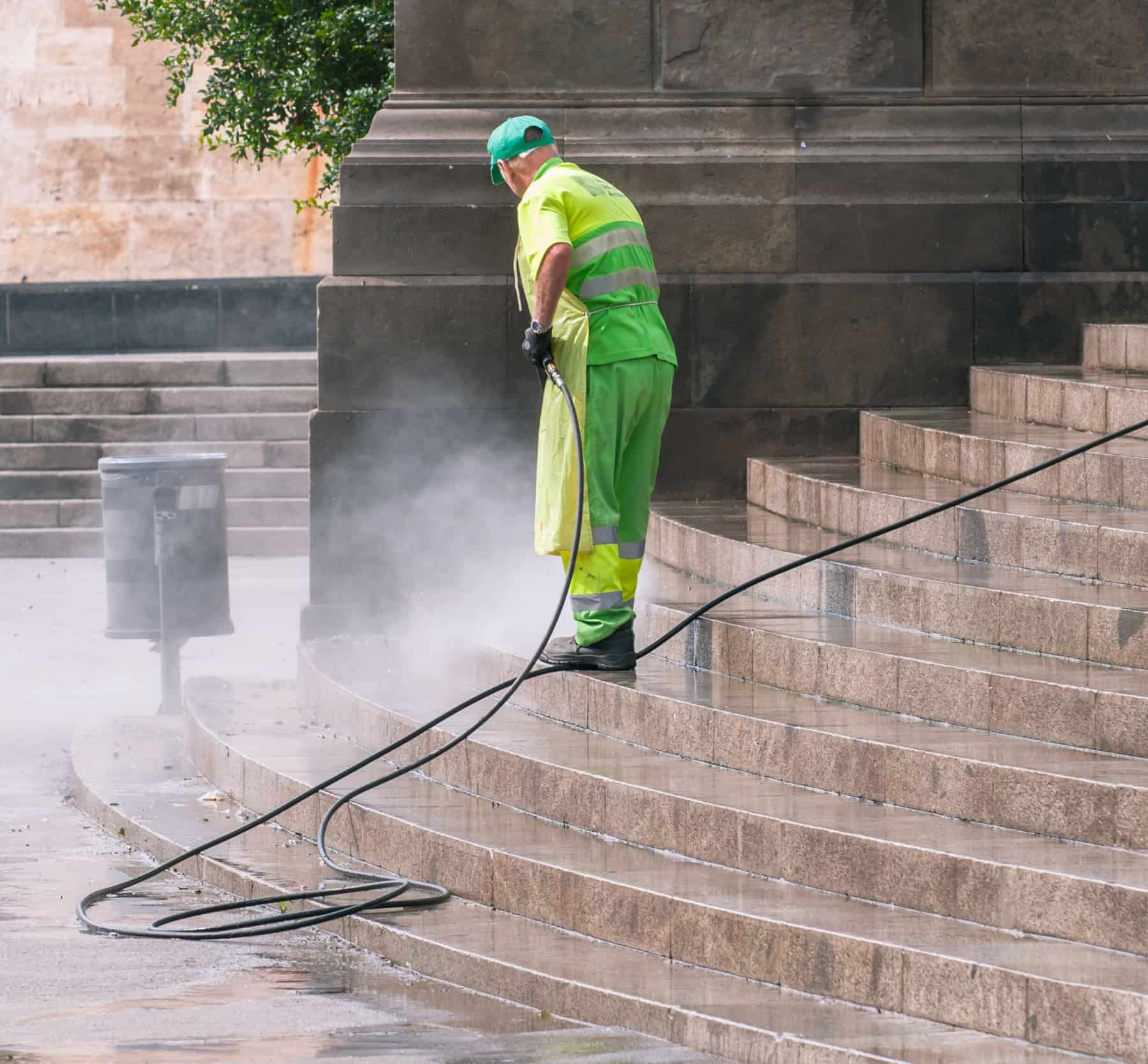
Two people with the same pressure washer will get very different results on the same driveway. The difference is not strength or patience; it is a handful of habits. Consistent distance from the surface. Overlapping passes by about a third. Keeping the nozzle moving. Working with the sun rather than into it so you can see what you have done. Applying cleaner and letting it dwell instead of trying to blast dirt off dry.
Everything in this hub is written as a sequence, because that is how the job goes wrong: not through a bad decision, but through doing the right things in the wrong order. Rinsing before the cleaner has dwelled. Washing siding bottom-up with no pre-wet. Cleaning a deck and staining it the same afternoon, before the wood has dried.
The single most useful habit is to decide the ceiling before you pick up the gun, and then choose the nozzle to stay under it. Concrete will take whatever you have. Pavers will take a lot but will lose their jointing sand. Composite decking and softwood will fur and furrow. Vinyl siding will survive a surprising amount of pressure from the front and almost none driven up behind it. Painted wood lifts. Roof shingles lose their granules, permanently.
Which is why the first page most people should read in this hub is the surfaces you should never pressure wash, and why the general answer for anything delicate is to reduce pressure and increase chemistry — the approach set out in soft wash vs pressure wash.
Protect, pre-wet, apply, dwell, agitate if needed, rinse, dry. Protect means moving furniture and covering planting. Pre-wetting a surface stops cleaner soaking in unevenly and leaving tide marks. Dwell is where the chemistry works — usually five to ten minutes, and never allowed to dry. Rinse from a consistent distance with a wide tip. And drying time matters enormously if a coating is going on afterwards, which is the point of pressure washing before staining a deck and pressure washing before painting.
Flat concrete and paving: a surface cleaner for the field and a wand for the edges. Wood: a wide fan tip at low pressure, or a brush attachment, never a turbo nozzle. Siding: low pressure, a house wash, and an extension wand so you stay off a ladder. Gutters: a curved gutter attachment, from the ground.
Standing on a ladder holding a running pressure washer is the most dangerous thing a homeowner does with one of these. The gun kicks. Buy reach instead.
Pick the surface you are actually cleaning from the tiles above. If you have not bought a machine yet, these pages will tell you what capability you need, then the pressure washers hub will tell you which one has it. And the chemical half of every job on this page is in soaps and detergents.
HOWTO
The full driveway sequence, including the dwell step most people leave out.
Read it →

HOWTO
Pavers, slabs and natural stone, including the re-sanding step nobody plans for.
Read it →

COMPARE
The surface-by-surface split, and why professionals soft wash houses.
Read it →

HOWTO
Timber and composite, with the mistake that leaves a washboard pattern.
Read it →
HOWTO
Timber fencing without furring it, plus whether you need to wash before staining.
Read it →
GUIDE
What a finish actually needs, how long to dry, and when washing hurts more than helps.
Read it →
HOWTO
The sequence for siding, and the upward-spray mistake that gets water into the wall.
Read it →

HOWTO
Order of work for a full exterior, and how to do the upper story without a ladder.
Read it →
GUIDE
What paint needs, the drying times, and the lead paint rule that is not negotiable.
Read it →

GUIDE
The definitive do-not list, each with the reason and an alternative.
Read it →