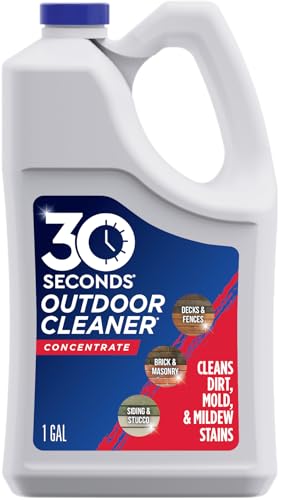
A patio is usually a biological problem rather than a dirt problem: it sits in shade, stays damp, often has trees over it, and the result is green film, black spotting and genuinely slippery areas. That means the cleaner matters more than the pressure here.
Test first, genuinely
Pavers vary enormously — concrete, clay, natural stone, some with surface treatments — and some react badly. A purple-tinted concrete cleaner can briefly stain a very porous paver. Limestone and some sandstones are sensitive to acidic products.
Five minutes on one hidden paver, and if it is natural stone, check whether the supplier publishes a care guide. Product options are in best patio cleaners.
The sand problem
Any pressure cleaning of sand-jointed paving removes jointing sand. A surface cleaner removes less than a wand; a turbo nozzle removes essentially all of it. Unfilled joints mean weeds next spring and eventually pavers that shift.
So plan for it. Let the patio dry fully, then sweep fresh jointing sand in and compact it. Polymeric sand costs more and resists weeds and washout considerably better. And do not use a turbo nozzle on jointed paving — treat stubborn spots chemically instead.
Why a surface cleaner is the better tool here
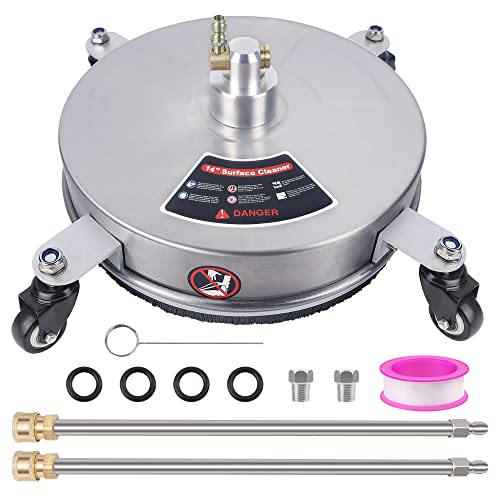
Counter-intuitively, it is gentler than a wand. The force is split between nozzles on a fast spinning bar at a fixed height, so no point gets more than a fraction of a second of exposure and you cannot hold it in one place.
For a patio, smaller is better: an 11 or 14-inch head steers around furniture legs, planters and awkward corners where a 15-inch head wedges. Four wheels matter, because paver patios have a lip at every joint.
Working around a slope and a drain
Patios usually fall toward a drain or a lawn. Work with that: clean the high end first and rinse downhill in one direction, so dirty water is always leaving rather than running back over clean paving.
If the fall is toward the house — it happens — work outward and be deliberate about where the water goes. Check any air bricks or door thresholds before you start.
Keeping it clean longer
Three things genuinely help. Cut back overhanging growth so the patio gets some sun and dries. Clear leaves in autumn rather than letting them compost in the joints. And use a cleaner that kills growth rather than just removing it — which is the difference between cleaning annually and cleaning twice a year.
For a deeply shaded patio that regrows every year, a no-rinse treatment applied once and left is often less total work than washing it twice — soft wash vs pressure wash.