Skip to content
Pressurewasher & Patio

Best pressure washers for patios

Mixed materials, soft joints, and furniture in the way.

Best pressure washers for patios - Westinghouse ePX3500
By Mike M.|Last checked: |How we pick

How this is funded: the product links on this page are Amazon affiliate links, and a purchase through one earns this site a commission at no extra cost to you. Commission does not decide what gets recommended or in what order. Read the full disclosure.

Quick picks

The short answer first. Tap any row to jump to the full write-up, or go straight to Amazon to check the current price.

#ProductBest forScorePrice
1
Westinghouse ePX3500

Westinghouse ePX3500

2,500 max PSI with 1.76 max GPM is the top of what a household outlet will give you, and the anti-tipping frame fixes the main complaint about electric units.

The most capable electric here
2
Sun Joe SPX3000

Sun Joe SPX3000

The one I would point most first-time buyers at: enough pressure for a driveway, two detergent tanks, and a price that does not sting if you use it twice a year.

The safe default first machine
3
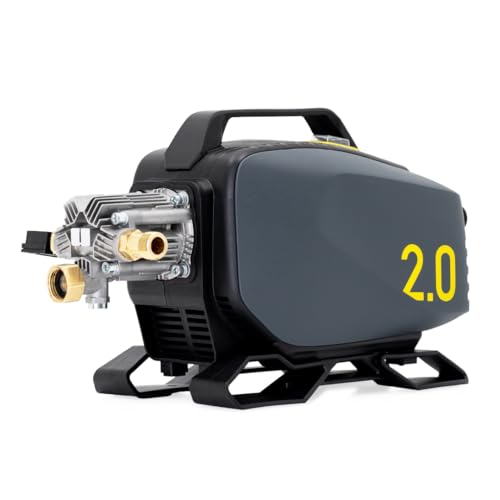
Active 2.0 GPM Electric

Active 2.0 GPM Electric

2.0 GPM at 1,800 PSI is the opposite trade to most electrics, and it is the better trade for flat surfaces - but it is sold tool-only.

Volume over pressure
4
Karcher K1700

Karcher K1700

The cheapest Karcher that is still a complete machine: a certified 1,700 PSI, a detergent tank and three tips in the box.

The Karcher to buy first
See today's price on the Karcher K1700 - $189.99

$229.99 17% off

#ad Price as of November 18, 2026. How this is funded

5
Greenworks 2000 PSI

Greenworks 2000 PSI

2,000 PSI at 1.2 GPM: plenty of pressure for concrete, but the water volume is the limit on how fast you will get through it.

A middle-ground electric for mixed jobs
See today's price on the Greenworks 2000 PSI - $208.86

$229.99 9% off

#ad Price as of November 18, 2026. How this is funded

6
Sun Joe SPX-SC14 14-Inch

Sun Joe SPX-SC14 14-Inch

Fourteen inches is the sweet spot for an electric unit: wide enough to save real time, narrow enough that 1.6 to 2 GPM still spins it properly.

The best match for an electric machine
7
Simple Green Oxy Solve Concrete and Driveway

Simple Green Oxy Solve Concrete and Driveway

The concrete-specific version of the Oxy Solve line: it handles the gray film and green algae that make a driveway look old, but it is not a degreaser.

General driveway grime and algae

Scores are our own, against the published rubric on how we pick. They are editorial judgments from specs and catalog data, not lab test results.

The best pressure washers for patios are the ones picked on flow rather than pressure: 1.6 GPM or better, around 1,700 to 2,500 PSI, and a surface cleaner on the end of it. That is a different shopping list from a driveway machine, and here is why.

A driveway is one material. A patio almost never is. There is slab or paving underfoot, mortar or sand in the joints, a step or two of brick, a run of decking off the back door, furniture that has to be moved, and planting at the edges that will not enjoy what you are about to spray. That is why “buy the biggest PSI you can afford” goes wrong here more often than on any other job around a house.

This page ranks machines for that specific problem. The criteria are below, in the order they actually matter, and every pick carries the thing I would warn you about before you buy it.

What I picked for, in order

1. Flow, not pressure. A patio is an area job. How quickly you finish is decided by gallons per minute, because GPM is what carries lifted dirt off the slab and lets you keep moving. Pressure only decides whether the dirt lifts at all, and at 1,600 PSI and up it already does on anything a homeowner has. Two machines at 2,000 PSI, one at 1.2 GPM and one at 2.0 GPM, are not close on a 400 square foot patio — the second one is most of an hour faster. The arithmetic behind that is in PSI vs GPM explained.

2. Control at the low end. Patios mix hard and soft. Concrete pavers do not care. Sandstone, soft brick, composite decking boards and anything painted or sealed care a great deal. A machine that only has one setting — everything, all the time — makes the soft parts of the job a gamble. Either an adjustable unit or a good nozzle set gives you a way down.

3. Real detergent delivery. On a patio the soap does more of the work than the water does, because most of what you are looking at is biological: algae, moss and the black film that comes back every spring. An onboard tank or a working siphon turns a two-pass job into one. The machines without one are not disqualified, but they are a step down for this job specifically.

4. Whether a surface cleaner will spin on it. This is the quiet one. Below roughly 1.2 GPM, most surface cleaners turn too slowly to be worth owning, and a surface cleaner is the single biggest time saving available on a patio. I have weighted toward machines that can actually run one.

5. Portability on a patio. You will be dragging the unit between furniture and around corners the entire time. A tippy machine on four small casters will go over on a step, and it will go over while the trigger is pulled.

How much pressure a patio actually needs

For poured concrete and concrete pavers, 1,600 to 2,500 PSI is the useful window. Everything in that band will clean; the top of it just cleans a little faster. Above 3,000 PSI on a patio you are mostly buying the ability to etch your own paving, which is a permanent mistake that shows up as a pale stripe exactly where you held the wand.

For the softer parts, come down. Sandstone, soft reds and old brick want 1,200 to 1,500 PSI and a wide tip. Composite decking manufacturers generally cap what they will warranty well below that — check your boards, and treat the figure in the manual as the limit rather than a suggestion. Wood is its own problem, covered in how to pressure wash a deck.

You adjust downward in three ways: a wider nozzle, more distance, or a machine with a dial. The nozzle is the one people forget. A 25-degree green tip at 2,500 PSI is gentler on a slab than a 15-degree yellow tip at 1,700, because the force is spread over a wider arc. The whole color system is in pressure washer nozzle colors.

The jointing problem nobody warns you about

If your patio is laid on sand with sand or a dry mix in the joints, a pressure washer will remove that jointing. Not might — will, if you let the jet sit square into a joint. The slab looks spectacular for a week and then the pavers start to rock, because the thing holding them apart has gone down the drain.

Three habits avoid it. Work the wand at a shallow angle across the joints rather than down into them. Use a surface cleaner, which cannot point into a joint at all — this is a real reason to own one beyond speed. And get the moss out mechanically before you start, because trying to blast rooted moss out of a joint is precisely the thing that strips the sand. A long-handled joint and moss brush does that in ten minutes.

Plan on re-sanding afterwards either way. Kiln-dried sand is cheap and goes down with a broom, and a patio that has been washed and re-sanded stays clean noticeably longer than one that was only washed.

Why a surface cleaner is on this list

A wand cleans a stripe two or three inches wide. You can see every overlap for the rest of the summer, and on a patio with any pattern to it the stripes follow your arm rather than the paving, which looks worse than the dirt did. A surface cleaner cleans an even 14-inch disc at a consistent height, three to five times faster, without ever pointing water into a joint.

The catch is fit. Surface cleaners are turned by flow, so the head has to match your machine: 11 inches for about 1.2 GPM, 14 inches for 1.6 to 2.0, 15 inches only for 2.1 and up. Buying bigger than your flow supports makes the tool worse, not better. The full sizing table is in surface cleaners for patios and decks, and this page walks through checking your machine’s figure.

You will still need the wand. Surface cleaners cannot do the last inch against a wall, corners, steps, or the gap behind a planter. Budget ten minutes of wand work at the end rather than being annoyed by it.

The soap does more than the machine does

The gray-green film on a shaded patio is algae, and the black spotting is usually lichen. Water removes the top of both and leaves the roots, which is why a patio washed with plain water is gray again within two months. A sodium-percarbonate concrete cleaner applied first, left to dwell for ten minutes, and then rinsed costs a few dollars a job and roughly doubles how long the result lasts.

Apply it through the machine’s soap tank on the low-pressure setting, keep it wet while it dwells, and never let it dry on the slab — a dried cleaner leaves its own pale ghosting. Mixing is covered in house wash mix ratios, and the alternatives sit in best patio cleaners.

Two things to keep away from a patio. Acid-based masonry cleaners will etch concrete and strip the color out of pavers, and they are sold next to the safe ones. And household bleach poured neat around planting will kill it; if you are using a bleach-based house wash near beds, wet the plants down first and rinse them after. The reasoning is in bleach and pressure washers.

Electric or gas for a patio

Electric, for almost everyone. A typical patio is within 50 feet of the house, it is an enclosed space where a gas engine is loud and unpleasant to stand next to, and the flow you need is comfortably inside what a good 15-amp electric delivers. Gas earns its place on long driveways and acreage, not on a patio you can walk across in six strides.

The exception is a large patio — call it 800 square feet and up — combined with a driveway you also want to do. At that point the 2.3 to 2.5 GPM of a mid-range gas machine starts to pay for the noise. The honest comparison is in electric vs gas pressure washer.

Cordless is a third option now, and for a patio it is still mostly the wrong one: the units with enough pressure cost several times a corded machine, and the cheap ones are rinsing tools. Where that line currently sits is in best cordless pressure washers.

What I left out, and why

Anything over 3,000 PSI. On a mixed-material patio the extra pressure is a liability you have to remember to avoid using. If you need that machine for other work, buy it for that work — see best gas pressure washers — and use a wide tip on the patio.

Sub-1,500 PSI machines. They are pleasant and safe and they will not shift three winters of algae in one pass. For furniture and planters, yes. For the slab, no.

Hot-water units. Genuinely better on grease and genuinely out of scope at a homeowner price. If that is where your patio problem lies, read can you use hot water in a pressure washer before you buy something that will be damaged by it.

The order I would actually buy in

Machine first, then the surface cleaner, then a bottle of concrete cleaner. That is about the cost of one visit from a cleaning company, and it is the three things that decide the result. A longer hose and a better gun are nice and can wait — you will know within one job whether you want them, and the accessories page is there when you do.

When the machine arrives, read how to set up a pressure washer before you unbox it in the rain, and how to pressure wash a patio for the method, including the two passes that make the difference between clean and striped.

The picks in full

Westinghouse ePX3500 - Westinghouse pressure washing gear

#1 - The most capable electric here

Westinghouse ePX3500

Westinghouse

Our score

2,500 max PSI with 1.76 max GPM is the top of what a household outlet will give you, and the anti-tipping frame fixes the main complaint about electric units.

What it is

  • 2,500 max PSI, 1.76 max GPM
  • Anti-tipping technology
  • Electric

Specs from the Amazon catalog listing.

Rubric marks

Ease of use
8.4
Capability
8.8
Build
8.2
Value
8.6

Raw rubric marks out of 10. The score above places them on our published 8.4-9.8 recommendation scale.

Good

  • Highest pressure-and-volume combination of any electric on this site
  • Does not fall over when you pull the hose, which sounds trivial until it happens
  • Enough GPM to run a 14-inch surface cleaner properly

Good to know

Give it a 15-amp circuit of its own and it behaves perfectly.

Sun Joe SPX3000 - Sun Joe pressure washing gear

#2 - The safe default first machine

Sun Joe SPX3000

Sun Joe

Our score

The one I would point most first-time buyers at: enough pressure for a driveway, two detergent tanks, and a price that does not sting if you use it twice a year.

What it is

  • 2,500 max PSI, electric
  • Dual onboard detergent tanks
  • Five quick-connect nozzle tips included
  • Total Stop System - the pump only runs while the trigger is held

Specs from the Amazon catalog listing.

Rubric marks

Ease of use
9.2
Capability
8.0
Build
7.4
Value
9.4

Raw rubric marks out of 10. The score above places them on our published 8.4-9.8 recommendation scale.

Good

  • Two soap tanks means you can keep house wash in one and car soap in the other
  • Starts with a switch - nothing to prime, choke or pull
  • The nozzle set covers every job a homeowner has, so there is nothing else to buy on day one

Good to know

The stock hose is short, so plan on moving the unit as you work along a driveway.

Active 2.0 GPM Electric - Active pressure washing gear

#3 - Volume over pressure

Active 2.0 GPM Electric

Active

Our score

2.0 GPM at 1,800 PSI is the opposite trade to most electrics, and it is the better trade for flat surfaces - but it is sold tool-only.

What it is

  • 1,800 PSI, 2.0 GPM
  • 15-amp
  • Sold as tool only

Specs from the Amazon catalog listing.

Rubric marks

Ease of use
7.4
Capability
8.0
Build
8.0
Value
6.8

Raw rubric marks out of 10. The score above places them on our published 8.4-9.8 recommendation scale.

Good

  • 2.0 GPM moves more dirt per minute than any other electric here
  • Lower pressure is safer on siding and wood
  • Rinses soap off far faster than a 1.2 GPM unit

Good to know

It ships tool-only, so budget for a hose, gun and tips alongside it.

Karcher K1700 - Karcher pressure washing gear

#4 - The Karcher to buy first

Karcher K1700

Karcher

Our score

The cheapest Karcher that is still a complete machine: a certified 1,700 PSI, a detergent tank and three tips in the box.

What it is

  • 1,700 PSI, 1.2 max GPM (Karcher US product page)
  • Electric, CETA certified rating
  • Three spray nozzles included
  • Onboard detergent tank

Specs from the Amazon catalog listing.

Rubric marks

Ease of use
9.2
Capability
6.4
Build
8.0
Value
8.8

Raw rubric marks out of 10. The score above places them on our published 8.4-9.8 recommendation scale.

Good

  • CETA certified, so the 1,700 figure is a measured rating rather than the max-PSI number most listings lead with
  • Detergent tank and tips are in the box, so there is nothing to buy before the first Saturday
  • Light enough to carry out of the garage one-handed and store on a shelf

Good to know

The removable detergent tank holds 0.5 gal, so a whole-house wash means one refill partway through.

See today's price on the Karcher K1700 - $189.99

$229.99 17% off

#ad Price as of November 18, 2026. How this is funded

Greenworks 2000 PSI - Greenworks pressure washing gear

#5 - A middle-ground electric for mixed jobs

Greenworks 2000 PSI

Greenworks

Our score

2,000 PSI at 1.2 GPM: plenty of pressure for concrete, but the water volume is the limit on how fast you will get through it.

What it is

  • 2,000 PSI, 1.2 GPM
  • Electric
  • Quick-connect tips

Specs from the Amazon catalog listing.

Rubric marks

Ease of use
9.0
Capability
7.2
Build
7.8
Value
8.4

Raw rubric marks out of 10. The score above places them on our published 8.4-9.8 recommendation scale.

Good

  • Handles driveway grime that 1,600 PSI leaves behind
  • Quiet enough to use on a Sunday morning without annoying anyone
  • Good hose and cord management for the size

Good to know

1.2 GPM suits an 11-inch surface cleaner; a 15-inch head wants more water.

See today's price on the Greenworks 2000 PSI - $208.86

$229.99 9% off

#ad Price as of November 18, 2026. How this is funded

Sun Joe SPX-SC14 14-Inch - Sun Joe pressure washing gear

#6 - The best match for an electric machine

Sun Joe SPX-SC14 14-Inch

Sun Joe

Our score

Fourteen inches is the sweet spot for an electric unit: wide enough to save real time, narrow enough that 1.6 to 2 GPM still spins it properly.

What it is

  • 14-inch cleaning width
  • Stainless steel housing
  • Four wheels
  • Universal quick-connect fitting

Specs from the Amazon catalog listing.

Rubric marks

Ease of use
8.6
Capability
8.4
Build
8.4
Value
8.8

Raw rubric marks out of 10. The score above places them on our published 8.4-9.8 recommendation scale.

Good

  • Spins properly on electric machines that choke a 15-inch head
  • Four wheels keep it flat, which is what stops the stripe pattern
  • Stainless housing instead of plastic at a similar price

Good to know

A 14-inch head wants about 1.6 GPM, so check your machine's flow first.

Simple Green Oxy Solve Concrete and Driveway - Simple Green pressure washing gear

#7 - General driveway grime and algae

Simple Green Oxy Solve Concrete and Driveway

Simple Green

Our score

The concrete-specific version of the Oxy Solve line: it handles the gray film and green algae that make a driveway look old, but it is not a degreaser.

What it is

  • Concentrate, 128 fl oz
  • Concrete and driveway formula
  • Unscented

Specs from the Amazon catalog listing.

Rubric marks

Ease of use
8.6
Capability
8.2
Build
8.4
Value
8.6

Raw rubric marks out of 10. The score above places them on our published 8.4-9.8 recommendation scale.

Good

  • Noticeably better on algae than a general cleaner
  • Oxygenated chemistry, so run-off is less harsh on planting beds
  • Covers a large driveway per bottle at the stated dilution

Good to know

Motor oil needs a dedicated degreaser - this is for general grime and algae.

Common questions

What is the best pressure washer for a patio?

The Westinghouse ePX3500 for most patios: 1.76 max GPM is enough flow to drive a 14-inch surface cleaner properly, and 2,500 max PSI is controllable around mortar joints and decking. On a small paved patio with furniture the Sun Joe SPX3000 does the same job for less, and on a large one the extra water of the Active 2.0 GPM unit is what shortens the afternoon.

What PSI do I need to clean a patio?

1,600 to 2,500 PSI covers concrete and concrete pavers comfortably. Come down to roughly 1,200 to 1,500 for sandstone, soft brick and composite decking, and check the manufacturer’s limit on composite boards. More detail in what PSI pressure washer do I need.

Will a pressure washer damage my patio?

It can, in two ways: etching the surface by holding a narrow tip too close, and washing the sand out of the joints. Both are technique rather than machine. Use a wide tip, keep moving, work across joints rather than into them, and re-sand afterwards.

Is an electric pressure washer powerful enough for a patio?

Yes, and it is the right choice for most patios. A 1.6 to 2.0 GPM electric has the flow to finish a normal patio in an afternoon and is far more pleasant to work next to than a gas engine in an enclosed yard.

Do I need a surface cleaner for a patio?

Not strictly, but it is the best money you will spend after the machine. It removes the striping problem, it is three to five times faster, and it physically cannot point water down into a joint. Size it to your machine’s flow, not your patio.

Should I use detergent, or is water enough?

Use a cleaner. Most patio dirt is algae and lichen with roots in the surface; water removes the visible layer and it regrows within weeks. A dwell-and-rinse with a concrete cleaner roughly doubles how long the patio stays clean.

How often should a patio be pressure washed?

Once a year is plenty for most, usually in spring once the worst of the weather has passed. A shaded, north-facing patio may want it twice. Washing more often than that wears the surface for no real gain.

Our recommendation

Our top pick

Westinghouse ePX3500

The most capable electric here

Runner-up

Sun Joe SPX3000

The safe default first machine

Sources

Brands: want your product tested? For Brands.
