Patios are usually a biological problem rather than a dirt problem. They sit in shade, they stay damp, they are often under trees, and the result is green film, black spotting and genuinely slippery areas. That means a cleaner matters more here than on a driveway, and pressure matters less.
What to buy
An oxygenated all-purpose outdoor cleaner is the sensible default. It handles algae and mildew, it is comparatively kind to the planting that patios are usually surrounded by, and it will not etch or discolour pavers.
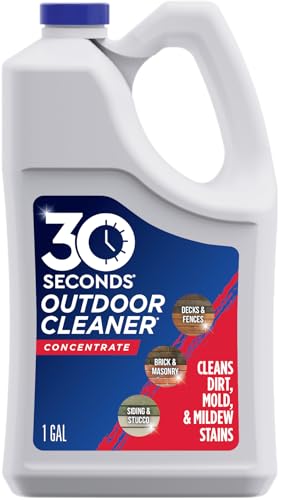
A faster biocidal concentrate if growth is heavy. 30 Seconds acts within minutes rather than requiring a long dwell, which is useful on a large patio where sections dry out before you get back to them.
A no-rinse treatment for a deeply shaded patio that regrows every year. Spray it and leave it; results over weeks, and it keeps working for months. For a shaded north-facing area this is often less work than cleaning twice a year.
Test on pavers first, genuinely
Pavers vary enormously — concrete, clay, natural stone, some with surface treatments — and some react to cleaners. A purple-tinted concrete cleaner can briefly stain a very porous paver. Natural stone, particularly limestone and some sandstones, is sensitive to acidic products.
Five minutes on an inconspicuous paver prevents a patio-wide mistake. For natural stone, check whether the supplier publishes a care guide before choosing anything.
The step everyone forgets: re-sanding
Any pressure cleaning of a sand-jointed patio removes some jointing sand. A surface cleaner removes less than a wand, but still some, and a turbo nozzle removes essentially all of it.
Unfilled joints mean weeds next spring and, eventually, pavers that shift. So plan for it: let the patio dry fully, then sweep fresh jointing sand in and compact it. Polymeric sand costs more and resists weeds and washout considerably better.
This is also an argument against the turbo nozzle on a patio. If you have stubborn spots, treat them chemically and let the cleaner do it.
Technique for a patio
Clear everything and pre-wet the planting. Patios are ringed by beds and pots, and run-off collects at the edges.
Pre-wet the slabs so the cleaner does not soak in unevenly.
Work in sections small enough that the cleaner will not dry before you rinse.
Rinse off the patio, not across it, pushing dirty water toward a drain or a lawn edge in one direction.
Full sequence in how to pressure wash a patio, and the attachment choice in surface cleaners for patios and decks.
Keeping it clean longer
Three things genuinely help. Cut back overhanging growth so the patio gets some sun and dries. Clear leaves in autumn rather than letting them sit and compost. And use a cleaner with real biocidal action rather than just removing the visible layer, which is the difference between cleaning annually and cleaning twice a year.