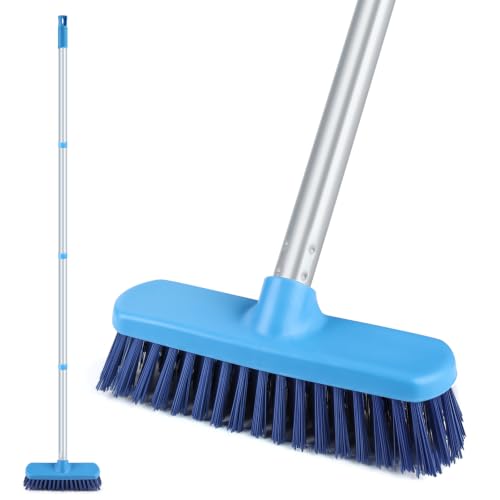
The uncomfortable truth about pressure washing is that most of the cleaning is chemistry and agitation, and the machine mostly does the rinsing. People who buy a bigger machine to solve a cleaning problem usually had a brush problem. A twenty-dollar brush and ten minutes of scrubbing will beat an extra 500 PSI on almost every surface around a house, and it will do it without etching anything.
This page covers the brushes worth owning alongside a pressure washer, grouped by the job rather than by price. Every pick has the thing I would warn you about, because there is no brush here that is right for every surface — using the wrong one is how people put permanent scratches in soft stone and composite decking.
Four kinds of brush, and what each one is for
Telescoping soft-bristle poles. A wide, soft head on an aluminum pole that extends to twelve feet or so. These exist for one reason: so you can wash upper siding, soffits and second-story windows without a ladder, and without pointing a pressure washer upward at a wall. They are the single safest purchase in outdoor cleaning.
Deck and patio scrub brushes. A stiff head on a broom handle. The job is working cleaner into the surface and lifting what the water will then carry away. Cheap, unglamorous, and the reason some patios come up like new and others do not.
Rotary pressure washer brush attachments. A brush head that clips onto the wand and spins on the water flow. These let you clean wood, painted trim and plastic at low pressure with mechanical agitation doing the work — the right tool for surfaces you are afraid of marking.
Joint and moss brushes. A narrow steel head on a long handle for the gaps between pavers. This is a specialist tool and most people do not know it exists until after they have washed the sand out of their patio.
What I picked for
Bristle stiffness matched to a real surface. Soft nylon for siding, vehicles and painted trim. Stiff nylon for concrete, composite and unsealed slabs. Steel only for joints and only away from anything soft. A brush is not a general-purpose tool, and the listings that claim otherwise are the ones that scratch things.
Reach that is honest. Every telescoping pole advertises a reach figure that assumes an average person holding it overhead. Take two to three feet off the advertised number if you are picturing what it will touch. I have noted the pole length separately from the claimed reach on every pick for that reason.
Weight at full extension. A twelve-foot aluminum pole with a wet twelve-inch head on the end is heavier than it sounds, and a pole with a hose running up it is heavier again. This is the thing that actually ends a session, not the dirt.
Whether the head is replaceable. Bristles flatten. On the better tools the head comes off; on the cheapest it does not, and the whole thing is landfill in two seasons.
Whether water comes through it. A flow-through brush fed by a garden hose carries loosened dirt away as you scrub instead of pushing it around. It costs a little more and it is a real difference on siding.
The surfaces where a brush beats the machine outright
Vinyl and painted siding. Pressure driven upward gets behind the laps and into the wall cavity, which is the one genuinely expensive mistake in home pressure washing. A pole brush with a house-wash soap cleans the same wall with no water going anywhere it should not. The method is in how to pressure wash vinyl siding, and the soaps are in best house wash soaps.
Composite decking. Most composite manufacturers limit what they will warranty to a pressure well below what an ordinary electric machine produces, and some void the warranty for pressure washing entirely. A stiff brush, a deck cleaner and a rinse is within every warranty ever written.
Painted and sealed surfaces. Sealed concrete, painted steps, powder coated furniture. Pressure strips the finish; a brush does not.
Anything you cannot reach safely. A brush on a pole beats a wand on a ladder every time. More than half of the pressure washing injuries that matter are falls rather than water.
The joint problem, specifically
If your patio or path is laid on sand, the jointing between the units is the weak point. A pressure washer jet pointed into a joint removes the sand, and once enough of it is gone the pavers start to rock. Moss makes this worse, because rooted moss resists the jet long enough that you instinctively hold the wand there until something gives — and what gives is the sand.
A long-handled steel joint brush takes the moss out mechanically first, standing up, in about ten minutes for a normal patio. Then the washer only has to clean a slab, and it can do that at a shallow angle that never points down into a joint. Re-sand afterwards with kiln-dried sand and a broom. The full sequence is in how to pressure wash pavers.
Keep steel bristles off sandstone, limestone, soft reds, painted concrete and composite. They will leave gray metal marks on light stone that look like scratches because they are.
Brush first, or wash first?
Wet the surface, apply the cleaner, let it dwell, then brush, then rinse. In that order.
Brushing a dry surface grinds grit into it and achieves very little. Brushing before the cleaner has had its ten minutes wastes the chemistry. And rinsing before you brush just means doing it twice. The one exception is moss in joints, which comes out dry — wet moss is slippery and smears rather than lifting.
Never let a cleaner dry on the surface while you are scrubbing a different section. A dried percarbonate or bleach cleaner leaves pale ghosting that is harder to remove than the dirt was. Work in sections you can finish, and keep the whole area damp. Mixing ratios are in house wash mix ratios.
Working overhead without hurting yourself
A twelve-foot pole with a wet head is a lever, and the weight all acts at the far end. Two things make it manageable. Keep your lower hand near your waist and your upper hand close to your chest, so the pole is braced against your body rather than held out in front of you. And work in strips across the wall rather than up and down it, because horizontal strokes use your shoulders and vertical ones use your lower back.
Never extend a pole near overhead power lines. Aluminum poles conduct, the drop line into a house is usually lower than people assume, and this is the one mistake in outdoor cleaning that is not recoverable. If the run of wall you want is under a service drop, leave it or get someone insured to do it.
Wet soap on a pole runs down the handle and onto your hands, so it is also the job where a dropped pole is most likely. Gloves with any grip at all and eye protection are sensible, and both are covered alongside the rest of the basics in pressure washer safety for beginners.
Making a brush last
Rinse it. House wash and percarbonate cleaners left in the bristles keep working on the bristles, and a brush put away wet with cleaner in it is noticeably softer the following spring. Thirty seconds with the hose is the whole maintenance routine.
Store it bristles-up or hanging. A brush left standing on its head takes a permanent set, and splayed bristles do not reach into a surface, which is the entire point of owning one. Replace the head when the bristles are visibly bent at rest rather than waiting until it stops cleaning — by then you have done a few jobs badly.
Check the pole clamps at the start of each season. The twist collars on telescoping poles are the part that fails, usually by slipping under load halfway up a wall, and a slipping collar is how a pole ends up through a window.
What a brush will not fix
Oil in concrete. Oil sits inside the slab rather than on it. Scrubbing moves the top of the stain and nothing else. That is a degreaser job — see concrete cleaner vs degreaser.
Large areas of slab. Scrubbing a 600 square foot driveway by hand is a weekend. That is what a surface cleaner exists for. The brush is for the perimeter, the steps and the soft bits.
Deep algae in porous stone. The roots are below the surface. A brush takes the visible layer and it returns in weeks unless a biocide-style outdoor cleaner is left to work.
What to buy, in order
If you own a pressure washer and nothing else, buy the stiff deck brush first. It is under twenty dollars, it is the step that makes the cleaner work, and it immediately improves every patio and deck job you do.
Add a telescoping soft-bristle pole the first time you look up at your own siding and think about a ladder. If you plan to do the windows in the same session, the set with a squeegee saves buying a second pole.
Add a rotary washer attachment if you have wood or painted surfaces you have been avoiding, and a joint brush if your paving is laid on sand. Neither is a first purchase, and both solve a problem that no amount of extra pressure will.
For the machine side of all this, the patio picks are in best pressure washers for patios and the gentle end of the range is in best pressure washers for decks and siding.