If you are looking for an alternative to a Karcher, the honest first step is knowing what you would be giving up. Karcher invented the rotating-jet pressure washer, it publishes CETA certified ratings on its four-digit models when almost nobody else publishes a measured figure at all, its residential electrics are GFCI-equipped and double insulated, and its K4 and K5 models use water-cooled induction motors rather than the universal motors in most cheap machines. That is a genuinely strong engineering record, and it is why a Karcher is the first machine most first-time buyers look at.
People still shop around, and in my experience they do it for two specific reasons rather than a general complaint. The first is flow. Karcher’s own US site states that its electric home-and-garden models run between 1.0 and 1.5 GPM, most commonly 1.2 to 1.3. That is a deliberate design choice — it is what makes these machines light, quiet and apartment-friendly — but it caps how fast a driveway goes. The second is the fitting: most Karcher models use the brand’s own bayonet connection at the lance rather than the quarter-inch quick-connect the rest of the US market uses, so the cheap turbo nozzles, surface cleaners and foam cannons on the shelf need an adapter. The K1700 is the exception — Karcher’s US product page for it states universal quick-connect nozzles and a standard M22 hose connection.
So this is not a list of “better than Karcher” machines. It is a list organized around those two reasons, plus price. Every machine below uses standard US fittings and was listed with a live price the day this page was written.
First, is a Karcher actually wrong for you?
Three cases where I would buy the Karcher and not an alternative:
You want a measured number, not a marketing one. The K1700 and the K1800PS Cube publish CETA certified ratings. Most of this category quotes “max PSI”, which is a ceiling a pump can touch briefly in ideal conditions. If comparable, checkable figures matter to you, that is a real reason to stay — see best Karcher pressure washers for which models publish what.
Storage is the constraint. The Cube models stack flat on a shelf. A wheeled upright does not. If your garage is full, that shape is worth money.
You want the induction motor and the hose reel. Karcher’s own comparison chart lists water-cooled induction motors on the K4 and K5 tiers, and the K5 Premium carries a built-in reel. One machine below matches that pairing at a lower price, but if you want it from Karcher, buy the K5.
If you are leaving for flow — three machines
Greenworks Pro 2300 PSI
2,300 PSI at 2.3 GPM with an SGS certified rating. This is the direct answer to the flow question: 2.3 GPM is nearly double the 1.2 GPM a typical Karcher electric moves, which is enough to spin a 15-inch surface cleaner at full speed and finish a driveway in one session, from a wall socket.
Honest con: it wants a 15-amp circuit to itself, it is two to three times the price of an entry Greenworks, and it is bigger and heavier than any Karcher K-series unit. You are trading the compact storable shape for water.
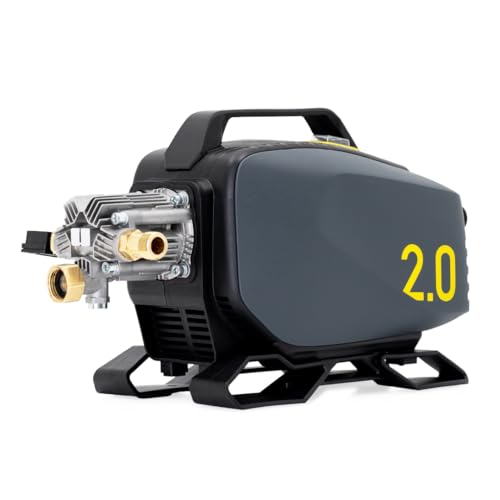
Active 2.0 GPM Electric
1,800 PSI at 2.0 GPM — the opposite trade to most electrics, and the right trade for flat surfaces and siding. Lower pressure with more water is both safer and faster on a patio than a high-PSI, low-flow machine, and it rinses soap off far quicker.
Honest con: it ships tool-only, so budget for a hose, a gun and tips alongside it. For a first-ever pressure washer that is a genuine drawback — a Karcher arrives ready to use.
Westinghouse ePX3050
2,100 max PSI at 1.76 max GPM with a foam cannon in the box, at a price below most Karcher models. It is the cheapest meaningful step up in flow from a 1.2 GPM machine, and the foam cannon covers the car job without an adapter hunt.
Honest con: both figures are maximums rather than certified ratings, so you are giving up exactly the measured-number honesty that is Karcher’s strongest argument.
If you are leaving for the fittings — two machines
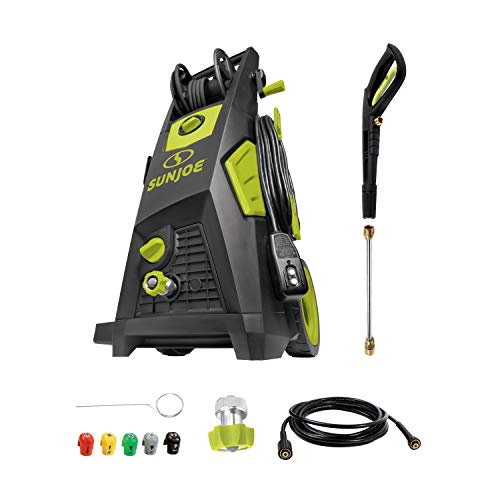
Sun Joe SPX3000
2,500 max PSI, two onboard detergent tanks, five quick-connect tips in the box, and a standard quarter-inch quick-connect at the wand. That last detail is the point of this entry: every twenty-dollar turbo nozzle, every surface cleaner and every foam cannon on the shelf fits it without an adapter. It is also the safe default first machine on this site.
Honest con: the stock hose is short, so you will move the unit along a driveway, and the build is plastic where a Karcher is not. See the full SPX3000 review for the detail.
Greenworks 2000 PSI
2,000 PSI at 1.2 GPM with quick-connect tips. The flow matches a Karcher of similar price, so this is not a flow upgrade — it is the same kind of machine on the fittings everybody else uses, usually for less money.
Honest con: at 1.2 GPM it has the same ceiling as the Karcher you were looking at, so if a driveway is the job, this swap solves the accessory problem and not the speed one. Pair it with an 11-inch head, not a 15-inch — will a surface cleaner work on my pressure washer has the sizing.
If you wanted the induction motor — one machine
Sun Joe SPX3501
A brushless induction motor, a brass inlet connector instead of a plastic one, and an onboard hose reel. Those are the three things that make the top of the Karcher range feel like better hardware, in a machine that uses standard fittings and usually costs less than the K5 Premium. If what drew you to Karcher was the K4/K5 motor spec rather than the badge, this is the closest match on this site.
Honest con: the reel adds weight and bulk, so it is the least storable machine in Sun Joe’s range, and Sun Joe does not publish a certified rating the way Karcher does on its four-digit models.
How to check any alternative before you buy it
Three checks, in this order. They apply to anything on a shelf, not just the machines on this page.
1. Find the GPM, not the PSI. If the listing publishes a flow figure, compare it to the 1.2 to 1.3 GPM a typical Karcher electric moves. Below that you are going backwards; at 1.76 you will notice; at 2.0 and up a driveway changes character. If the listing does not publish a flow figure at all, treat that as a warning rather than a detail — you cannot size a surface cleaner to a machine whose flow is unknown.
2. Find the fitting. Look for the words quarter-inch quick-connect at the wand and M22 at the gun. That is the US standard, and it means every accessory in the aisle fits. If the listing shows a twist-and-lock lance instead, budget for adapters. The whole system is explained in the quick-connect guide.
3. Count what is in the box. A machine with five tips, a soap tank and a 25-foot hose is cheaper than a machine with none of those at the same price. Two of the picks above include a foam cannon; one ships tool-only. That gap is worth more than 300 PSI.
Can you keep your Karcher accessories?
Partly, and it is worth knowing before you order. Nozzle tips and lances that use Karcher’s bayonet connection will not fit a standard gun without an adapter, so those stay with the old machine. Anything that connects at the water inlet or at the hose — a garden hose, an inlet filter, a quick-connect adapter set — generally carries over, because that end of the system is standard across brands. Detergent is universal: a bottle of concentrate works with any machine that can draw soap.
What you give up by leaving, stated plainly
Certified ratings. Of the six machines here, two publish a certified or third-party-tested figure and four quote maximums. Karcher’s four-digit models publish CETA certified ratings. That is a real loss and worth naming.
Compact, shelf-friendly shapes. The flow upgrades on this page are physically bigger machines. If you are short of storage, a 2.3 GPM electric is not a free win.
A dealer network. Karcher is a global brand with a parts and service footprint most of these competitors do not match.
What you gain is water and compatibility, and for most people shopping for a driveway or a patio those two things decide the weekend. For the brand-by-brand view of who does what well, see best pressure washer brands, and for the straight head-to-heads, Karcher vs Sun Joe and Karcher vs Greenworks.
What I would buy
You left because the driveway is slow: Greenworks Pro 2300, or the Active 2.0 if you already own a hose and a gun.
You left because the adapter hunt annoyed you: Sun Joe SPX3000. Standard fittings, two soap tanks, nothing else to buy.
You wanted the better motor: Sun Joe SPX3501.
You are not sure yet: the K1700 is the Karcher that uses standard quick-connect nozzles and an M22 hose fitting, so it is the one model where the fitting objection does not apply at all. If that was your only reason to leave, buy it and keep the certified rating.