Yes — with a 1,200 to 1,600 PSI machine, a 40-degree tip, and a degreaser doing the work, an engine bay cleans up safely and looks dramatically better. What causes the horror stories is pressure and aim: a narrow tip up close drives water past seals and into connectors that were designed to shed rain, not to take a jet. Modern engines are wet-weather tolerant, not pressure-washer tolerant, and the difference is the whole article.
The five places water must not go
1. The fuse box and relay center. Usually a black plastic box on one side of the bay, often with a lid that is water-resistant from above and open underneath. Water in a fuse box causes corrosion and intermittent faults that are expensive to chase. Cover it with a plastic bag.
2. The alternator. It is an open-vented electrical machine with bearings and brushes, mounted low where spray collects. Never aim at it directly.
3. The air intake. Anything that leads to the airbox. Water drawn into an intake is the one mistake that can genuinely destroy an engine, and that risk is highest on cold-air intakes mounted low in the bay.
4. Electrical connectors, the ECU and any exposed module. Connectors are sealed against splash from a specific direction. A jet from the wrong angle gets past the seal and sits there.
5. The ignition coils and plug wells. Water pooling in a spark plug well causes misfires that appear a day later and look like an unrelated fault.
The method
Engine cold, or barely warm. Warm helps the degreaser work; hot risks cracking a manifold or a plastic cover with thermal shock. Let it sit for an hour after driving.
Disconnect nothing, but cover plenty. Plastic bags and a few rubber bands over the fuse box, the alternator, the intake and the battery terminals. Five minutes of taping is the entire difference between this being safe and being a gamble.
Dry-brush the loose debris first. Leaves and grit in the cowl and around the wiper area come out dry far more easily than wet.
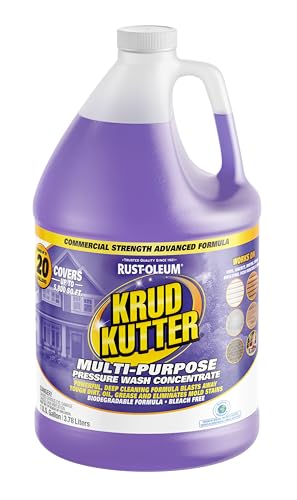
Apply a degreaser and let it dwell. A multi-purpose concentrate at a moderate dilution handles the oily film in a bay. Spray it on, give it five minutes, and agitate the greasy areas with a brush. This is the step that does the cleaning — exactly as with siding or decking, the chemistry works and the water only rinses.
Rinse at low pressure, from the top down, at an angle. 40-degree tip, two feet away, and never perpendicular to a connector. Think of it as a heavy rain, not a jet.
Dry it, then run it. Blow or wipe the water out of the hollows, then start the engine and let it idle for ten minutes with the hood up. The heat drives off what you could not reach. Do not drive straight off with a wet bay.
Which machine, and why less is more
| Machine class | Suitable for an engine bay? |
|---|
| 1,200 - 1,600 PSI electric | Yes. This is the right tool |
| 1,800 - 2,100 PSI electric | Yes, with a 40-degree tip and distance |
| 2,500 PSI and up electric | Only with real discipline on tip and distance |
| Gas, 2,400 PSI and up | No. Too much pressure, too little control |
| Any machine with a 0 or 15-degree tip | No. Put the red and yellow tips away |
A 1,600 PSI electric is the sensible machine for this and for the rest of the car, which is the same argument made in best pressure washers for cars and what PSI to wash a car. If your only machine is a gas unit, clean the bay with a brush, a degreaser and a garden hose instead — it is a better outcome than trying to be careful with 2.4 GPM at 2,900 PSI.
When to skip it
A car with a known electrical gremlin. You will never convince yourself afterwards that the wash was not the cause.
A hybrid or electric vehicle. High-voltage components, orange cabling and sealed battery enclosures are not a DIY wash target. Leave those bays to a shop or clean them with a damp cloth.
An older car with perished seals and brittle connectors. The parts that were supposed to keep water out are the ones that have aged.
Anything with an exposed, non-standard intake. If you can see the filter from above, do not put water near it.
Immediately before a long drive. Give the bay a day.
The undercarriage is the easier win
If what you actually want is a cleaner car underneath rather than a show-ready engine bay, the undercarriage is a much better use of a pressure washer: no electronics to dodge, and road salt under a car does real, expensive damage over a few winters. An undercarriage attachment does it from above without you lying on the driveway — the picks are in best pressure washers for car detailing.
And for the paintwork, the method is the opposite of force: foam, dwell, rinse, and a wash mitt for contact. The sequence is in how to pressure wash a car, and whether pressure washing a car is safe at all is answered in is it safe to pressure wash a car.