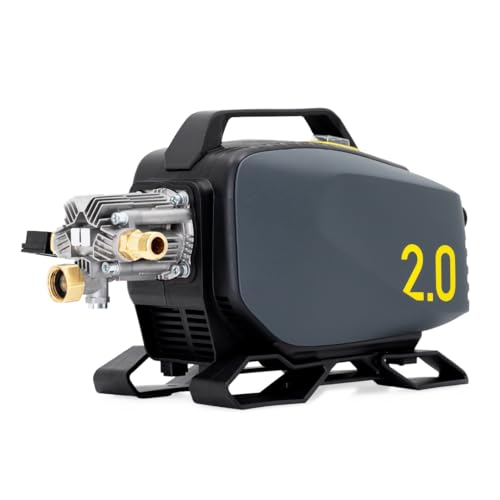
Driveways are the one job where it is worth buying more machine than you strictly need, and the reason is simple arithmetic. A driveway is a large flat area, the dirt on it is mostly loose grime and algae, and how long you spend out there is decided by how many square feet per minute you can cover. Square feet per minute is a function of flow, not pressure.
The one thing that matters more than the machine
A surface cleaner. Nothing else on this site changes a job as much. A wand cleans a two-inch stripe and leaves overlap marks; a 14 or 15-inch surface cleaner cleans an even disc and does not. A two-car driveway that takes three hours with a wand takes well under an hour with the right head.
Which is why the machines here are ranked on flow: the surface cleaner is driven by water volume. Below roughly 1.6 GPM the spray bar turns too slowly to be worth it, and below 1.2 it barely turns at all. If you buy one machine for one job, buy the flow.
Grime, algae and oil are three different problems
General grime comes off with water and a surface cleaner. Green and black algae needs a cleaner that kills it, or it returns in weeks — this is the most common reason a freshly cleaned driveway looks bad again by midsummer. Motor oil will not come off with any amount of pressure, because it is soaked into the slab rather than sitting on it, and needs a product that draws it out.
All three are covered in the concrete cleaner picks. Spending twenty dollars there does more for the result than spending a hundred extra on the machine.
Electric or gas for a driveway
Honestly: gas, if the driveway is long and you will do it annually. The flow difference is large and compounding, and a 2.5 GPM gas unit with a 15-inch head is simply the right tool. A high-flow electric like the ePX3500 or the Active 2.0 gets close enough for a standard two-car drive and avoids the engine entirely.
The one combination to avoid is a high-PSI, low-flow electric. It will take all day and it will be more likely to etch or stripe the concrete while doing it, because you will be tempted to use a narrow tip and get close.
Method, briefly
Pre-wet, apply cleaner and let it dwell, run the surface cleaner in overlapping passes, then do the edges and the perimeter with a wand or a turbo nozzle, then rinse the whole slab in one direction so nothing dries unevenly. The full sequence, with the mistakes to avoid, is in how to pressure wash a driveway.