The machine to buy is the Westinghouse ePX3500 — 2,500 max PSI at 1.76 max GPM, which is the highest flow of any electric here and the thing that actually throws water to a gable. But the machine is only half the purchase. The part that gets you to the second story safely is a telescoping extension wand, and without one you will end up on a ladder holding a tool that pushes back. That combination is the whole answer to this question.
Why more PSI is the wrong instinct here
People shopping for a two-story house reach for the biggest pressure number on the shelf, on the theory that pressure equals distance. It does not work that way. A jet of water aimed upward loses energy to gravity and to air the entire way, and by the time it reaches 25 feet the pressure arriving at the wall is a fraction of what left the nozzle — regardless of whether the gun started at 1,800 PSI or 3,000.
What does survive the trip is volume. More gallons per minute means more water actually landing on the siding, which is what carries dirt away. This is the same principle that governs every other job on this site, and PSI vs GPM explained is the short version.
The second reason to stop chasing PSI: at the top of a wall you are working near soffits, vents, light fixtures, window seals and the gap under lap siding. High pressure aimed upward drives water behind the cladding, which is how a clean house becomes a wet wall cavity. Siding wants volume, soap and patience. The method is in how to pressure wash a house.
Specs that matter for height
| Pick | PSI | GPM | What it contributes |
|---|
| Westinghouse ePX3500 | 2,500 max | 1.76 max | Most electric flow, anti-tipping frame |
| Westinghouse ePX3050 | 2,100 max | 1.76 max | Same flow, gentler pressure, foam cannon |
| Simpson Clean Machine 2900 | 2,900 | 2.4 | Most volume, no outlet needed |
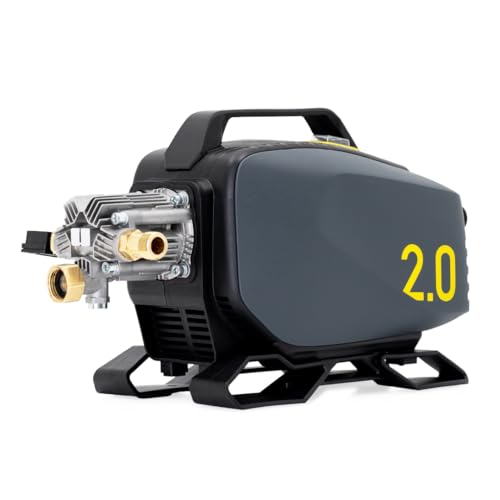
| Active 2.0 GPM | 1,800 | 2.0 | Gas-class volume from an electric |
| Tool Daily telescoping wand | — | — | 21 ft of reach, plus a brush head |
1. Westinghouse ePX3500 — the pick
1.76 max GPM is the number to buy, and the anti-tipping frame matters more than it sounds when you are dragging a machine around a house on uneven ground with a 21-foot wand attached. 2,500 max PSI gives you headroom for the driveway after you finish the siding, and because it is a maximum rather than a working figure, you will not be fighting it at the top of a wall.
2. Westinghouse ePX3050 — the same flow, less pressure
Identical 1.76 max GPM at 2,100 max PSI. For a house that is mostly vinyl or painted wood, the lower pressure is a feature rather than a compromise — and the included foam cannon is the correct way to apply house wash, because siding gets cleaned by chemistry and dwell time, not force. Pair it with a house wash concentrate.
3. Simpson Clean Machine 2900 — if the house is big and the outlet is far
2.4 GPM is the most volume on this page, and on a large two-story house with a lot of wall area that difference is real: more water landing per second means fewer passes. Gas also frees you from cord length, which on a big footprint is the practical constraint nobody thinks about until they are 80 feet from the garage. The costs are noise, weight, fuel and a pull cord.
4. Active 2.0 GPM — volume without the engine
2.0 GPM from a 15-amp electric sits between the Westinghouse units and the Simpson, which makes it the interesting middle option for a tall house where you still want a switch rather than a choke. Note it is sold as tool only, so budget for a gun, a hose and tips — and for this job, budget for a 50-foot hose rather than a 25.
5. The telescoping wand is not optional
21 feet of extension, from the ground, with a brush head included. This is the component that turns any of the machines above into a two-story machine, and it is the one that keeps you off a ladder — which is the actual safety issue here. A pressure washer gun produces a sideways reaction force, and a tip that unclogs suddenly produces a jolt. On the third rung that is annoying. At gutter height it is an ambulance.
Two practical notes. First, a long wand is heavy when full of water, so expect to work in shorter stretches than you planned. Second, the pressure arriving at the tip of a 21-foot wand is lower than at the gun, which is exactly the behavior you want on siding. More options in best pressure washer extension wands.
The rest of the setup, briefly
A 50-foot high-pressure hose. You want to reach three sides of the house from one position rather than moving the machine eight times. Hose picks here.
A wide tip, nothing narrower than 40 degrees. Up high, a narrow tip is both less effective and more likely to force water past the siding. Nozzle colors.
House wash concentrate and a soap tip or injector. The chemistry does the work on a wall; the water just carries it and rinses it.
And know when to stop. Heavy mildew two stories up, stained stucco or anything near a roof line is a soft-wash job, not a pressure job — soft wash vs pressure wash draws that line. Second-story windows and gutters have their own method in cleaning gutters with a pressure washer.