Sun Joe is the brand most first-time buyers end up in front of, and it is the brand where the model numbers help you least. SPX3000, SPX3001, SPX3500, SPX3501, SPX7000, SPX205E, SPX1500 — the numbers are not a ladder. A higher one does not reliably mean more pressure, more water, or a better machine. Two of them differ only by a hose reel. Two others carry the same headline PSI with a different motor behind it.
So this page does not rank the lineup by number. It ranks it by what each machine can finish, and it names the one thing I would warn you about on every pick. If you are still deciding between brands rather than models, start with best pressure washer brands and come back.
What I picked for, in order
1. Flow, then pressure. Sun Joe leads with max PSI on every box, and max PSI is the least useful number in the category. What decides whether you finish a driveway in an hour or four is gallons per minute, because water volume is what carries lifted dirt off the surface. Sun Joe’s electrics run from about 1.1 GPM at the bottom of the range to the mid 1-point-something at the top, and that spread matters far more than the spread in their PSI figures. The arithmetic is in PSI vs GPM explained.
2. Certified ratings over max ratings. A “2,500 max PSI” machine is not a 2,500 PSI machine. The SPX3000 listing is unusually honest about this and prints both figures: 2,500 max, 2,030 PWMA rated. The rated number is the one you will actually work at. Where a model publishes a certified figure, I weighted that.
3. The inlet fitting and the motor type. Two parts decide whether a cheap electric lasts five seasons or two: the plastic inlet where the garden hose screws on, which cracks, and the motor, which on the budget models is a universal motor that runs hot and loud. The induction models cost more and are a different ownership experience.
4. What is in the box. Sun Joe is generous here, and it is a real part of the value. Nozzle tips, a 20 to 25 foot hose, and on several models a foam cannon already included. A machine that needs nothing else on day one is worth more than its sticker suggests.
5. Whether a surface cleaner will spin on it. Below roughly 1.2 GPM most surface cleaners turn too slowly to be worth owning, and a surface cleaner is the biggest single time saving available on concrete. Several Sun Joe models sit at or under that line, which quietly caps what they can ever be used for.
The three machines that matter
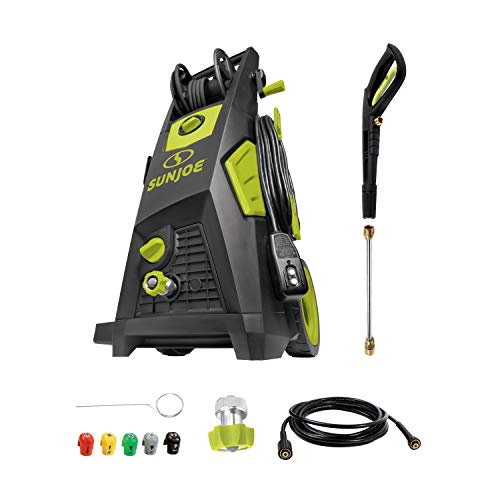
Strip the lineup down and there are three real answers. The SPX3000 is the default: 2,500 max PSI, two onboard detergent tanks, a full nozzle set, and a price that does not sting if the machine only comes out twice a year. It is the one I point most first-time buyers at, and it has been this site’s standing recommendation since launch — the long version is in the SPX3000 review.
The SPX3501 is the same working pressure on better hardware: a brushless induction motor, a brass inlet connector instead of plastic, and a hose reel. Those three changes address exactly the three things that go wrong with budget electrics. If you expect to use the machine monthly rather than seasonally, the extra money is the most sensible upgrade in the range.
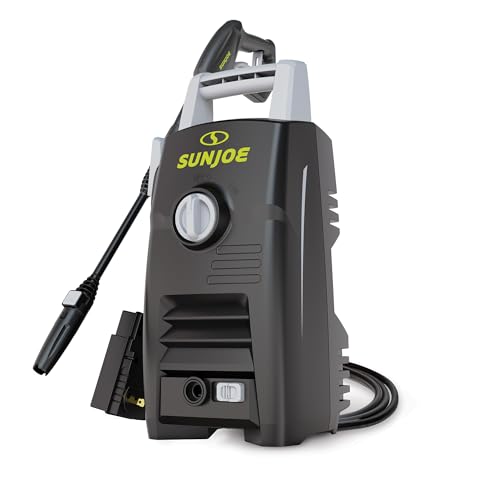
The SPX205E-XT is the honest cheap one. It is small, light, has a GFCI cord built in, and will clean a car, a set of patio chairs and the trash cans very happily. It will not do a stained driveway, and no amount of patience changes that. Buying it for concrete is the most common Sun Joe regret.
Max PSI versus what you actually get
Every pressure washer sold in the United States can print a max PSI figure, which is measured at the nozzle under conditions you will never reproduce in a yard. The PWMA certified figure is measured the way you will use it. On the SPX3000 the gap is 2,500 versus 2,030 — about 19 percent. On machines that do not publish a certified number, assume a similar gap and plan around it.
This matters in a specific way for Sun Joe buyers. The SPX3000-XT1 publishes 2,200 PSI as a certified rating rather than a max, which makes it look weaker than the SPX3000 on the shelf and is in fact the more honest number. If you only compare the front of the boxes you will pick the wrong one. What the figures mean for your own job is laid out in what PSI pressure washer do I need.
The two detergent tanks are the real Sun Joe advantage
Most electrics at this price have one soap tank or a siphon tube in a bottle. The SPX3000 has two tanks, and after a season of owning one you understand why that is worth more than 300 PSI. You keep house wash in one and car soap in the other, and switching jobs is a dial rather than a rinse-out. Soap does most of the cleaning that people credit to pressure — the reasoning is in do I need pressure washer soap.
Two cautions. The tanks only draw on the low-pressure setting, so if soap is not coming through, check the nozzle before you blame the machine — that is the first thing in soap injector not working. And never put household bleach in an onboard tank: it attacks the seals, and the reasons are in bleach and pressure washers.
Where Sun Joe is genuinely weak
Flow. No Sun Joe electric in this lineup reaches the 2.3 GPM that electric machines from other brands now offer, and most sit at 1.1 to 1.2 GPM. That caps surface-cleaner performance and makes large concrete areas slow. If a long driveway is the main job, look at pressure washers for driveways rather than anywhere in this range.
Plastic where it matters. The inlet fitting, the quick-connect couplers and the wand on the cheaper models are all plastic. They work, and they wear faster than brass. A brass adapter at the inlet is the single best preventative purchase — see quick-connect fittings.
Frame stability. The original SPX3000 tips on uneven ground, and it tips while the trigger is held. The XT1 frame is better. If your yard is sloped, that is a real reason to pay the difference.
Model churn. Sun Joe retires and renames models constantly. That affects you when you want a replacement hose or a spare wand in year three. Buy universal-fitting accessories rather than model-specific ones wherever you can.
What I left out, and why
SPX1500-Q and SPX100-GO. Both are currently sold, both are cheap, both sit at 1,300 to 1,500 PSI. They are fine car-and-furniture tools and they are not pressure washers in the sense most buyers mean. The SPX205E-XT is in the same bracket, better equipped, and is the pick I would rather stand behind.
SPX1000. A 13-amp, 1.2 GPM unit that is still listed and still works. It is simply outclassed on price by the newer models above it, and there is no job it is the best answer for.
The gas range. Sun Joe is an electric brand. When they put an engine on a frame they are competing with Simpson and Westinghouse on those brands’ home ground, and they lose. If you need gas, read best gas pressure washers.
How Sun Joe compares to the brands you are also looking at
Against Karcher, Sun Joe gives you more equipment in the box and Karcher gives you better build and a quieter machine — Karcher vs Sun Joe has the detail. Against Greenworks, the two brands are closely matched at the bottom and Greenworks pulls ahead at the top on flow, which is covered in Sun Joe vs Greenworks and in best Greenworks pressure washers. Against Westinghouse, Sun Joe wins on accessories and loses on frame stability and flow — see Sun Joe vs Westinghouse.
What to buy alongside it
A 14-inch surface cleaner is the accessory that changes what the machine is for, and 14 inches is the right size for Sun Joe’s flow figures — a 15-inch head will turn too slowly on 1.2 GPM. Sizing is in will a surface cleaner work on my pressure washer. After that, a 50-foot hose so you stop dragging the unit around, and a bottle of the right detergent for whatever you bought it to clean. The full list is in the accessories kit.
When it arrives, spend ten minutes on how to set up a pressure washer before the first pull of the trigger. These machines are easy to set up wrong in one specific way: running them with the faucet not fully open, which starves the pump and is the most common cause of a machine that will not build pressure.